Introduction: Who Gets Heard?
When we talk about life as an amputee, the stories we see most often don’t reflect the full picture.
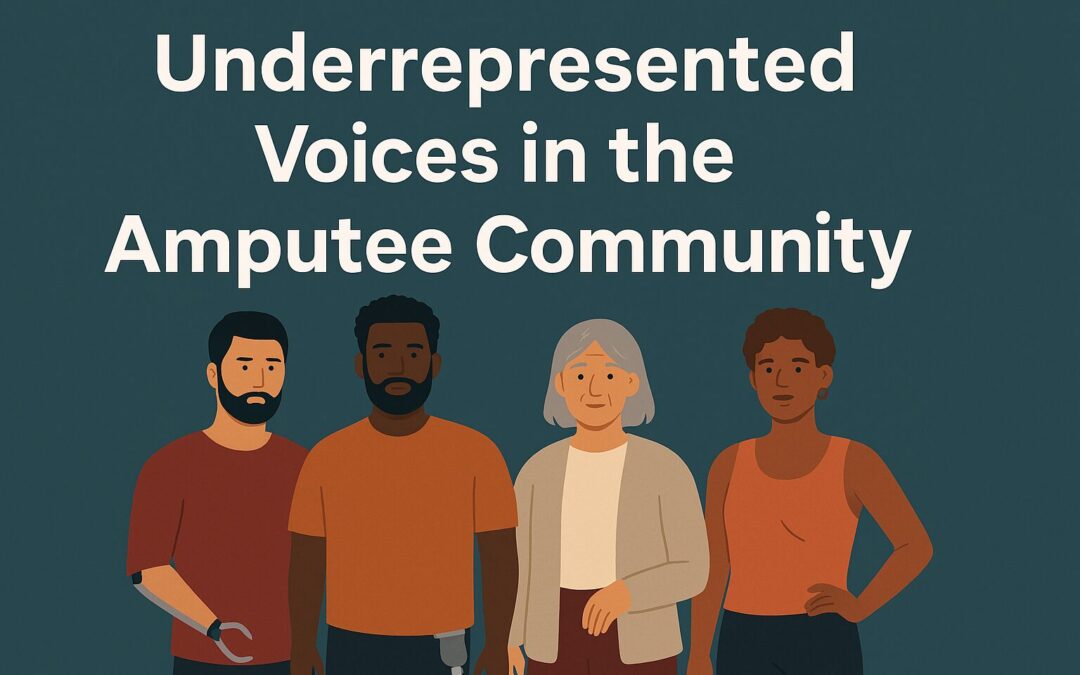
The amputee community is diverse—across ethnicity, gender, age, disability, and life experience. Yet many voices remain underrepresented, unheard, or misunderstood.
Recent data from our own community highlights this clearly: 19% of amputees engaging with us identify as being from ethnic minority backgrounds. That’s nearly 1 in 5 people—yet their experiences are rarely centred in mainstream conversations.
This matters. Because representation shapes understanding, support, and outcomes.
The Reality: A Diverse Amputee Community
Our diversity and inclusion data, based on over 640 responses, shows the amputee community is far from one-dimensional:
- 19% of respondents are from ethnic minority backgrounds
- The majority identify as White British, but there is clear representation across:
- Asian and Asian British communities
- Black and Black British communities
- Mixed heritage individuals
- Other ethnic groups
This diversity reflects real life—but not always what is visible in media, healthcare narratives, or public awareness.
Intersectionality: More Than Just Amputation
One of the strongest patterns in the data is that amputation is rarely the only challenge someone faces.
Across the responses:
- Many individuals report additional disabilities or long-term conditions, including:
- Diabetes
- Chronic pain
- Arthritis
- Mental health challenges such as anxiety and depression
- Some individuals describe being wheelchair users, visually impaired, or deaf alongside limb loss
- Others highlight complex health histories involving cancer, vascular conditions, or neurological conditions
This tells us something important:
The amputee experience is not singular—it is layered.
For those from underrepresented backgrounds, these layers can create even greater barriers.
The Hidden Challenges for Underrepresented Amputees
1. Cultural Barriers to Support
People from ethnic minority backgrounds may face:
- Language barriers
- Cultural stigma around disability
- Reduced access to culturally appropriate support
This can lead to individuals feeling isolated or less likely to seek help.
2. Healthcare Inequality
Experiences of healthcare are not equal across all groups.
Underrepresented amputees may experience:
- Delayed diagnoses
- Limited access to specialist care
- Less tailored rehabilitation
When combined with amputation, these inequalities can significantly affect recovery and long-term outcomes.
3. Representation and Visibility
Representation matters. Seeing someone like you navigating limb loss can change everything.
Yet many amputees from underrepresented groups report feeling:
- Invisible in media and awareness campaigns
- Underrepresented in peer support spaces
- Lacking role models who reflect their identity
What the Data Tells Us About Daily Life
The responses in the dataset paint a powerful and honest picture of life as an amputee:
- Mobility challenges are a recurring theme, with many people relying on prosthetics, wheelchairs, or mobility aids
- Chronic pain and fatigue are widely reported, often affecting daily routines and independence
- Mental health impact is significant, with individuals describing isolation, anxiety, and frustration
- Everyday tasks—from cooking to leaving the house—can require adaptation or support
These challenges are shared across the community—but for underrepresented individuals, they can be compounded by lack of access, understanding, or representation.
Why Underrepresented Voices Must Be Centred
Inclusion isn’t just about numbers—it’s about whose stories shape the narrative.
When we centre underrepresented amputee voices:
- Support services become more accessible and relevant
- Barriers are identified and addressed more effectively
- Individuals feel seen, valued, and understood
- The entire community becomes stronger
The 19% matters—not as a statistic, but as people whose experiences deserve equal visibility.
Building a More Inclusive Amputee Community
To truly support all amputees, we must:
Amplify Diverse Voices
Share stories from people of different ethnic backgrounds, ages, genders, and experiences.
Improve Accessibility
Ensure services are culturally aware, inclusive, and easy to access for everyone.
Acknowledge Intersectionality
Recognise that many amputees are living with multiple challenges—not just limb loss.
Create Safe Spaces
Build communities where everyone feels they belong, without judgement.
Conclusion: Representation Is Not Optional
The amputee community is diverse. Our data proves it.
But diversity without inclusion is not enough.
By recognising that nearly 1 in 5 amputees in our community come from ethnic minority backgrounds, and by listening to the wider experiences captured in this data, we can begin to reshape the narrative.
Because every amputee story matters.
And every voice deserves to be heard.
Recent Comments