For many people, returning to work after limb loss is about far more than finding a job. It is often a journey of rebuilding confidence, rediscovering purpose, and navigating significant physical and psychological challenges.
Over the past year, Steel Bones has a piloted a specialist careers support programme for people with limb loss and limb difference with fantastic expert volunteers. This has provided valuable insights into the employment challenges facing this community. What has emerged is a clear picture: while many individuals want to work and contribute, the barriers they face extend far beyond CV writing and interview preparation.
What We Have Learned
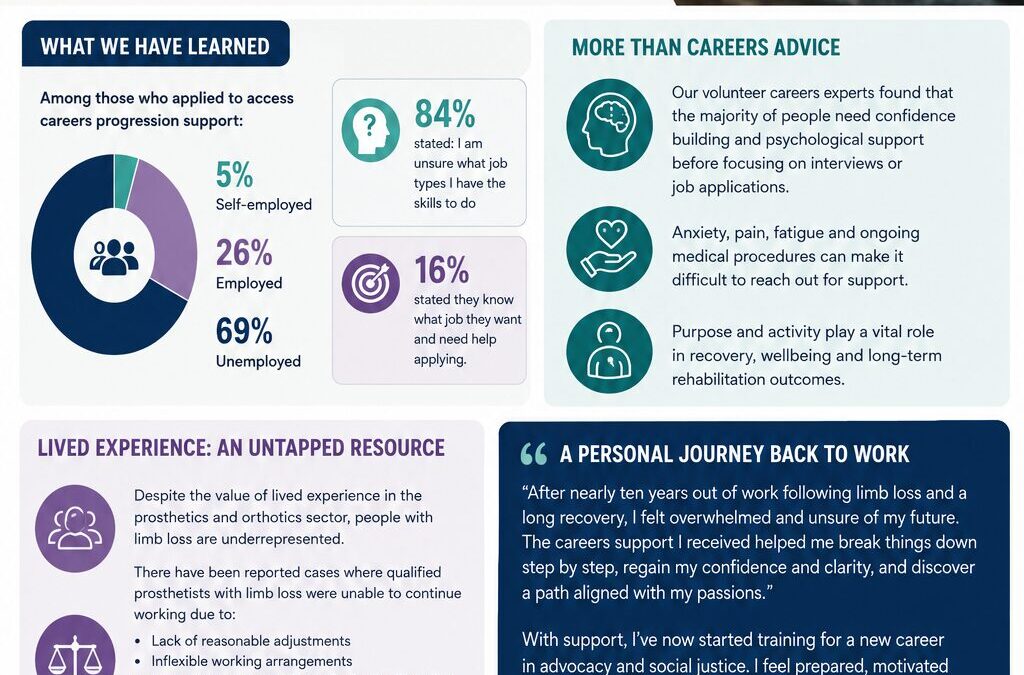
Among those who applied to access careers progression support:
- 5% were self-employed
- 26% were employed
- 69% were unemployed
Perhaps even more striking was the uncertainty many participants felt about their future career options:
- 84% said they were unsure what types of jobs they had the skills to do
- 16% said they knew what job they wanted and simply needed support with applications
These findings suggest that the primary challenge is often not employability itself, but confidence, career clarity, and self-belief.
The Need for More Than Careers Advice
The programme is supported by volunteer careers professionals who have extensive experience across a range of sectors. One consistent theme identified by the team is that many participants require confidence-building and psychological support before they are ready to focus on interviews, applications, or career progression.
For some individuals, the impact of limb loss extends beyond physical rehabilitation. Anxiety, chronic pain, fatigue, and ongoing medical procedures can make it difficult to engage with employment support, even when the desire to work remains strong.
As a result, many people who could benefit from careers guidance may not seek support until much later in their rehabilitation journey.
Purpose and Recovery Go Hand in Hand
Healthcare professionals and rehabilitation specialists have long recognised the importance of purpose, activity, and meaningful engagement in supporting recovery outcomes.
Employment is not simply about financial independence. It can provide routine, social connection, confidence, identity, and a renewed sense of contribution. Supporting people to return to work, retrain, volunteer, or explore new opportunities can therefore play a significant role in long-term wellbeing and rehabilitation.
This is why sustained investment in specialist employment support for people with limb loss and limb difference is so important.
Lived Experience: An Untapped Resource
The prosthetics and orthotics sector presents an interesting example of the challenges that still exist within employment practices.
Despite the value that lived experience can bring to patient care, people with limb loss remain underrepresented within the profession. There have been reported cases where qualified prosthetists with limb loss were unable to continue in their roles due to a lack of reasonable workplace adjustments.
Examples have included difficulties securing flexible working arrangements to manage lengthy commutes, physical demands of clinic schedules, and requests for part-time working being declined. Such cases highlight the importance of inclusive employment practices and greater flexibility for disabled professionals.
A Personal Journey Back to Work
One participant described approaching the careers support service after spending almost a decade out of paid employment following traumatic limb loss, further surgery, and a lengthy recovery process.
Although physically and mentally stronger, the prospect of returning to work felt overwhelming. They were uncertain about what they wanted to do, what they were capable of, and how the employment landscape had changed during their absence.
Through a series of structured coaching conversations, personalised action plans, and ongoing support, they began to gain clarity and confidence. Rather than viewing employment as a daunting all-or-nothing challenge, they were able to break the process down into manageable steps.
The participant ultimately identified a career path aligned with their passion for advocacy and social justice and has since embarked on further training to achieve that goal.
Reflecting on their experience, they described feeling reassured, motivated, and better equipped to move forward. Most importantly, they regained confidence in their own abilities and potential.
Looking Ahead
The early findings from this programme reinforce an important message: employment support for people with limb loss is not simply about job searching.
Many individuals need support to rebuild confidence, identify transferable skills, understand their options, and believe that meaningful employment is still possible.
With the right guidance, encouragement, and workplace flexibility, people with limb loss and limb difference can continue to make valuable contributions across every sector of society.
The challenge now is ensuring that specialist support services are available, accessible, and properly funded so that more people can benefit from them in the years ahead.
Further Reading
Research has highlighted the complex relationship between limb loss, rehabilitation, and employment outcomes, including the importance of workplace support, vocational rehabilitation, and psychological wellbeing in facilitating successful returns to work.
As awareness grows, there is an opportunity for employers, healthcare professionals, policymakers, and disability organisations to work together to create more inclusive pathways into employment for people living with limb loss and limb difference.
Research Papers
https://www.tandfonline.com/doi/abs/10.1080/09638280701320797
https://link.springer.com/article/10.1007/s10926-026-10388-6?fromPaywallRec=true
Recent Comments